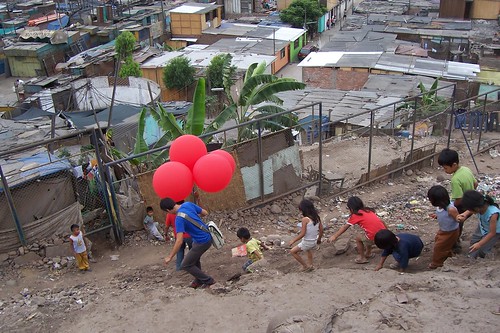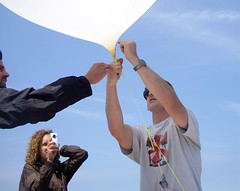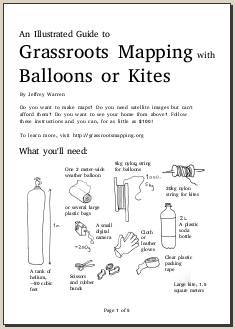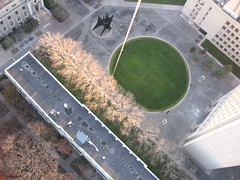
Grassroots Mapping is a series of participatory mapping projects involving communities in cartographic dispute. Seeking to invert the traditional power structure of cartography, the grassroots mappers used helium balloons and kites to loft their own “community satellites” made with inexpensive digital cameras.

What is Grassroots Mapping?

January 27th, 2010

Grassroots Mapping is a series of participatory mapping projects involving communities in cartographic dispute, started by Jeffrey Warren of the MIT Media Lab‘s Center for Future Civic Media.

Who are we?

Over the last few months, we’ve build a global community of mappers who are engaged in civic issues with low-cost mapping tools like balloons, kites, and remote-control airplanes.

Stewart Long and Oliver Yeh have emerged as some of the top experts in this nascent field and collaborated with Jeff to organize the Gulf Oil Mapping project. Starting in early May, we have been working with New Orleans-based Louisiana Bucket Brigade to get citizens out on boats and along beaches to produce high-resolution aerial imagery of the spill’s effects. All the imagery from this project is being released into the public domain

How it started

This January 2010, Jeff Warren worked with a series of organizations and communities to produce maps with children and adults from several communities in Lima, including the Cantagallo settlement of Shipibo on the bank of the Rimac and the Juan Pablo II community in Villa El Salvador.

Seeking to invert the traditional power structure of cartography, the grassroots mappers used helium balloons and kites to loft their own "community satellites" made with inexpensive digital cameras. The resulting images, which are owned by the residents, are georeferenced and stitched into maps which are 100x higher resolution that those offered by Google, at extremely low cost. In some cases these maps may be used to support residents' claims to land title. By creating open-source tools to include everyday people in exploring and defining their own geography, we hopes to enable a diverse set of alternative agendas and practices, and to emphasize the fundamentally narrative and subjective aspects of mapping over its use as a medium of control.

(Funded in part by the Legatum Center at MIT and the Center for Future Civic Media at MIT)